





501-918-3025
calsfoundation@cals.org
calsfoundation@cals.org
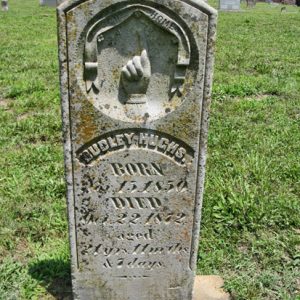
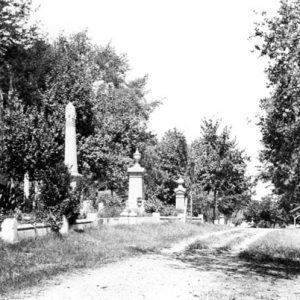
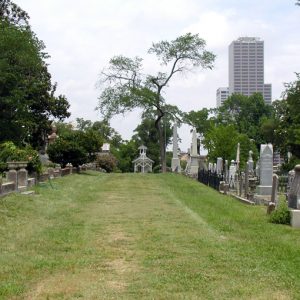
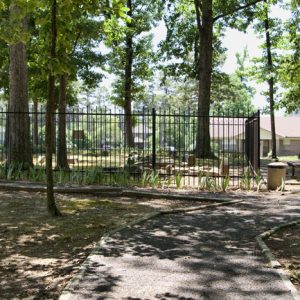
The act of burying our dead is a tradition dating back thousands of years and is practiced all around the world. These sites have many expressions and names, such as burial site, graveyard, tomb, burial mound, columbarium, and cemetery. Cemeteries come in many forms, including small private cemeteries, large public cemeteries, veterans’ cemeteries, family-owned cemeteries, church cemeteries, and cemeteries owned by counties or municipalities. By 2026, Arkansas had about 5,833 recognized cemeteries. The cemeteries in Arkansas have a long history—some are the resting place of settlers who came to Arkansas, while others belonged to the Native American peoples who lived in the area thousands of years before the European colonization of America.
The oldest known burial site in Arkansas is located in Greene County in the Cache River basin of northeastern Arkansas. This Native American burial site, known as the Sloan Site, belongs to the Dalton culture and is approximately 10,500 years old, making it the oldest of its kind in the western hemisphere. Arkansas is also home to other Native American burial sites, many of them being mounds that have been discovered and recorded in efforts to preserve them. Roughly 1,275 burial and ceremonial mounds are listed in the Arkansas Archeological Survey database. While some mounds were used for ceremonial purposes, one of the Plum Bayou Mounds (formerly named the Toltec Mounds) was found to be a burial mound; other burial sites include the mounds at Helena Crossing Site in Phillips County in eastern Arkansas built by the Fourche Maline culture.
When settlers began traveling west into Arkansas, they brought their own burial traditions with them in the form of cemeteries. Arkansas Post, the state’s earliest European colony, founded in 1686, moved between various locations along the Arkansas River but these sites, and their burial grounds, were eradicated by floods. The Post’s final location, today known as Arkansas Post National Memorial (Arkansas County), had an original cemetery that was gradually destroyed by the Arkansas River, as well as a newer cemetery (today known as Scull Cemetery), the burial site of Henry Wharton Conway, killed in a duel in 1827.
The state’s oldest surviving European cemetery is a remnant of one at the confluence of the Arkansas and Mississippi Rivers, named for the town of Napoleon (Desha County) but in use decades before the town’s founding. While other cemeteries are, anecdotally, older, the Pyeatte-Mason Cemetery at Maumelle (Pulaski County) contains a stone with an 1818 death date. Batesville (Independence County) was founded in 1821, making it the oldest still-existing town in Arkansas, and land for a cemetery was given to the town for burial use in 1826.
Arkansas also has many historic cemeteries with burials of enslaved people, including the Cypress Grove Cemetery located near Tillar (Drew and Desha Counties) at what was once the Hollywood Plantation. The Cypress Grove Cemetery was established around 1840 by Dr. Jonathan Martin Taylor and his wife when they started the Hollywood Plantation. The cemetery was in use until around 1940 and was used by enslaved workers on the plantation and then Black families in the early twentieth century, including members of the Lily of the Valley chapter 1007 of the Mosaic Templars of Winchester (Drew County). Other slave cemeteries in Arkansas include the Bearden Farm Cemetery, which is said to have been used for both slaves and Indians who worked on the Orville Bearden family farm, and the Sweet Home Cemetery near LaCrosse (Izard County), which became one of the largest Black communities in the Ozarks after the Civil War.
Cemeteries have historically been associated with churches and are often located in close proximity to a church. Some churches require that the person being buried in the church cemetery is either a member of the church or a member of that religious denomination. Other churches may allow non-members to be buried in the cemetery if a family member is buried there, ensuring that a family can be buried together. A few examples of cemeteries associated with churches include the St. Joseph Cemetery located on the grounds of the St. Joseph Catholic Church in Conway (Faulkner County) and the St. Matthew Baptist Church Cemetery located on the grounds of the St. Matthew Baptist Church in Scott (Pulaski and Lonoke counties). Monasteries and abbeys in the state also have cemeteries for the monks and nuns living there, including Subiaco Abbey, Marylake Monastery, and St. Scholastica Monastery.
There are Jewish cemeteries located around the state. In Little Rock (Pulaski County), there is the Oakland Jewish Cemetery, established in 1874 and managed in the twenty-first century by the Congregation B’nai Israel. In Pine Bluff (Jefferson County), the Anshe Emeth Cemetery dates from around 1867. Located in Hot Springs (Garland County) are the Jewish Rest Cemetery and the Beth Jacob Cemetery, with the oldest marker in the Jewish Rest Cemetery from the 1870s and the Beth Jacob Cemetery estimated to have been established around 1940. The Temple Israel Cemetery became active in Jonesboro (Craighead County) in the 1890s.
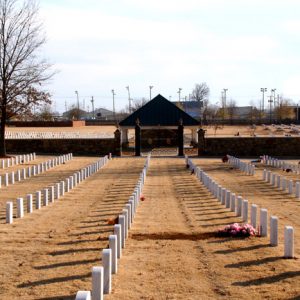
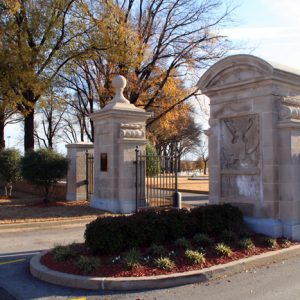
In 1997, the Arkansas General Assembly passed Act 235 to authorize the Arkansas Department of Veterans Affairs to establish and operate a state veterans’ cemetery system, and two Arkansas State Veterans Cemeteries were established, in North Little Rock (Pulaski County) and in Birdeye (Cross County), to accept the interments of military veterans and selected family members. National veterans’ cemeteries are located in Little Rock, Fayetteville (Washington County), and Fort Smith (Sebastian County).
Family cemeteries are less common than cemeteries associated with churches or public cemeteries owned by the town or city. A typical private family cemetery will contain burial sites for immediate family members and will be located either on private property that has been passed down in a family or property that is purchased for the specific use of a cemetery. Family cemeteries are used exclusively by members of the immediate family and are not open for non-family burials. Some examples include the Harden Family Cemetery in rural Chicot County, belonging to a prominent African American family; it contains sixteen marked graves and was in use from roughly 1892 to the 1960s. The Rice Family Cemetery in rural Varner (Lincoln County) contains a total of eighteen graves, eleven of which have a grave marker. The Rice cemetery became active in the 1870s, with the most recent burial in 2005.
In some cases, it is unknown if a cemetery is owned by a family or if it is owned by a local town or city government. This typically happens when the cemetery has either been abandoned or the records for the cemetery are not complete. Generally, state law has specific criteria that a cemetery must meet in order to be designated as abandoned. In Arkansas, those criteria are: 1) the cemetery has no permanent maintenance fund; 2) the cemetery is not suitably maintained and preserved as required for cemeteries; and 3) there have been no burials in the cemetery for a period of fifteen years. One example is the Frauenthal Cemetery in Conway. The land for the cemetery was donated by the Frauenthals, a wealthy family that played a large role in Conway’s early years. The cemetery is thought to be the first African American cemetery in Faulkner County that was not for enslaved people, with headstones dating back to 1880. The cemetery was abandoned and overgrown, no longer visible from the road. While there are still visible headstones in the cemetery, a majority of the area consists of what could be considered “makeshift graves,” with markers being made out of small rocks or carved into trees.
When a person cannot afford the cost of burial, relatives do not claim the body, or a person cannot be identified, the state steps in to provide a pauper’s burial. The cost of the burial is covered by public funds, and there is typically no grave marker and no burial ceremony. The Benton County Poor Farm Cemetery is an example of a paupers’ cemetery. It was started about 1860 and was used by the county as a burial place for the poor who could not afford the price of burial. Other so-called poor farms had their own cemeteries.
Regardless if a cemetery is associated with a church, is privately owned by a family, or is open for public use, there are rules that pertain to their operations. It is illegal to dig up a grave without the correct permits or court orders, and it is illegal to destroy grave markers. All cemeteries must be registered with the state they are located in, which includes any private or public cemetery. In addition, it is illegal for a person to be buried in an area that is not registered as a cemetery. However, burials on family land are possible if the family registers their land with the state under the regulations for a cemetery; however, if it is determined that the land sits too close to any body of water that could become contaminated due to the cemetery, then the state will deny the application.
To register a new cemetery with the state, an application for a permit must first be submitted to the Arkansas Cemetery Board that contains maps of the area, design details for cemetery specifics, and a legal description of the land. The Arkansas Department of Health must also be contacted and provided with all of the details to ensure health codes are met. To register an existing/historic cemetery, a petitioner has to contact the Arkansas Division of Heritage for site registration and preservation guidelines. To register an abandoned or private cemetery, the same steps would be followed, as well as providing proof of land ownership and financial ability to care for the cemetery.
For additional information:
“214.00.13 Ark. Code R. § 003—Rules of the Arkansas Cemetery Board.” Legal Information Institute, 2014. https://www.law.cornell.edu/regulations/arkansas/214-00-13-Ark-Code-R-SS-003#:~:text=The%20original%20application%20shall%20be,17%2D1008%20of%20the%20Act (accessed February 26, 2026).
Arkansas Cemetery Laws. Arkansas Division of Heritage. https://www.arkansasheritage.com/arkansas-preservation/programs/cemetery-preservation/arkansas-cemetery-laws (accessed February 26, 2026).
Ashbrook, Gail “Final Tributes, Sad Farewells: Epitaphs from Hot Springs Cemeteries.” The Record (2023): 9.1–9.12.
Burnett, Abby. Gone to the Grave: Burial Customs of the Arkansas Ozarks, 1850–1950. Jackson: University Press of Mississippi, 2014.
———. Though Silent They Speak: Arkansas Gravestones and Graveyards. Jackson: University Press of Mississippi, 2025.
Cemetery Plan Review and Approval. Arkansas Department of Health. https://healthy.arkansas.gov/programs-services/licensing-military-member-licensure-permits-plan-reviews/plan-review-guidance-forms/cemetery-plan-review-and-approval/ (accessed February 26, 2026).
McConnell, Kaitlyn. “Ozarks Notebook: Rural Cemeteries Shift in Changing Times.” The Daily Yonder, June 10, 2026. https://dailyyonder.com/ozarks-notebook-rural-cemeteries-shift-in-changing-times/2026/06/10/ (accessed August 14, 2026).
Mikaela Bailey
University of Arkansas at Little Rock


Comments
No comments on this entry yet.