501-918-3025
calsfoundation@cals.org
calsfoundation@cals.org
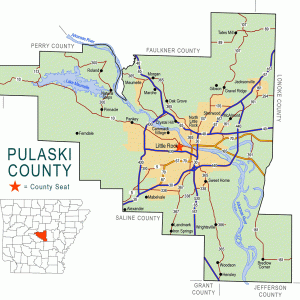
Dark Hollow is a predominantly African American neighborhood in North Little Rock (Pulaski County), located north of the Arkansas River near other Black working-class communities including Dixie Addition, Military Heights, Rose City, and Tie Plant. Emerging from a former swamp and lowland terrain associated with Loomis Lake, Dark Hollow developed in the early twentieth century as Black migrants sought railroad work, homeownership, education, religious community, and a measure of independence in a segregated city. Its history reflects both the resourcefulness of residents and the effects of environmental neglect, racial discrimination, urban renewal, and highway construction. Dark Hollow remains significant as an example of African American migration, placemaking, and resilience spanning more than a century.
The name Dark Hollow has several community explanations, but oral histories collected from residents emphasize the physical character of the place. Before the land was drained, the area was a large swamp; until modern utilities reached the area, the former swamp and surrounding lowland would have been especially difficult to navigate at night. Although some folkloric accounts described the name as originating in supernatural stories or Indigenous legend, residents interviewed in the early twenty-first century did not.
The name appeared in newspaper references before the neighborhood became a settled Black community. In 1896, the Daily Arkansas Gazette noted that Robert Reed and Walter Young had gone fishing at Dark Hollow. In 1909, the Arkansas Democrat reported an accidental shooting in the swamp area during a frog-hunting trip. Such accounts suggest that Dark Hollow was then a wetland used for hunting, fishing, and recreation by people across social and racial lines. They also indicate that African Americans were already present nearby, possibly in the west end of Argenta, which had an established Black population.
Dark Hollow’s transformation was tied to land reclamation and the growth of Argenta, later North Little Rock. In 1905, engineers and attorneys submitted plans to Pulaski County Judge C. T. Coffman to drain the area. Some citizens objected unless Dark Hollow Road could be protected from backwater. After legal and political negotiations, a major reclamation project moved forward with local improvement funding and federal support through the Bureau of Reclamation. City boosters saw the lowland as one of the few available directions for Argenta’s expansion, since rail lines, government land, hills, and the Arkansas River constrained growth elsewhere. By 1910, newspapers were describing plans to clear 2,200 acres and market 800 town lots. The project reflected Progressive Era faith that engineering could turn wetlands into taxable property, but it also shifted risk onto those who later lived there. Drainage remained a persistent problem, and later reports showed that water continued to shape neighborhood life.
The community that became Dark Hollow formed in relation to railroad labor, land availability, and Black migration. The Iron Mountain line, later part of the Missouri Pacific system, was central to North Little Rock’s economy and drew African American workers from Arkansas and other southern states. By about 1915, Black families were settling on the edge of the reclaimed marshland. The 1920 U.S. Census shows residents in Ward Three of North Little Rock who had migrated from Mississippi, Louisiana, South Carolina, Oklahoma, and rural Arkansas. Many were workers in railroad shops or construction camps; others brought skills such as carpentry that helped build the neighborhood.
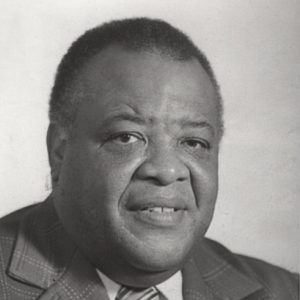
Curtis Sykes, a retired educator and founder of the Black History Commission of Arkansas, later encouraged an oral history project to preserve Dark Hollow’s history. After his death in 2007, the Dark Hollow Community Development Corporation obtained support from the Black History Commission to record interviews with residents and descendants from 2007 to 2009.
Dark Hollow also became home to George D. D. Huie, a Chinese immigrant who arrived in the neighborhood in the late 1930s after living in rural Arkansas towns. Huie operated a grocery store across from the Sykes home and served the community for more than thirty years. The store building, constructed by African American contractor John W. Smith, later became associated with Curtis Sykes and the Scipio A. Jones Alumni Association. Huie’s long presence shows the neighborhood’s complexity as a Black community that also included immigrant entrepreneurship and interracial neighborhood relationships.
Residents continually pressed for basic municipal services. During North Little Rock mayor Elrod Johnson’s reelection campaign, an Arkansas State Press advertisement (February 25, 1949) appealed to “colored citizens” and listed improvements in Black neighborhoods, including new streetlights in Dark Hollow and work on drainage ditches. The advertisement reveals that Black political activity in North Little Rock was active before the better-known civil rights struggles of the 1950s and 1960s. It also demonstrates the extent of neglect: residents had to organize and leverage political support for water, streetlights, drainage, and street improvements that other neighborhoods often received as ordinary civic infrastructure.
Education was a major community value. Black children in North Little Rock attended segregated schools, including the Argenta Colored School, Cedar Street Elementary School, and Scipio A. Jones High School, named for the prominent African American attorney who helped defend Black men sentenced to death after the Elaine Massacre of 1919. Many Dark Hollow residents and descendants remembered Black teachers as respected community leaders. In 1957, six seniors from Scipio A. Jones High School attempted to enroll at North Little Rock High School. Their effort of the North Little Rock Six, resisted by local authorities and tied up in court, contributed to the eventual integration of the North Little Rock School District in 1964.
Dark Hollow residents also helped expand educational opportunity for children with disabilities. Around 1969, parents and community members established a school for children with special needs in a former library building on Thirteenth Street, reportedly without state assistance. The school started at King Solomon Baptist Church as a small daycare serving children from Little Rock (Pulaski County) and North Little Rock. The school later moved to Military Heights and then to Sherman Park.
Religion anchored Dark Hollow’s social life, and during segregation, churches and schools provided social worlds that protected dignity when many public spaces were closed or restricted to Black residents. King Solomon Baptist Church, founded in 1904 in the Iron Mountain Addition of Argenta, was especially important. Newspaper records show the church holding baptisms in the Arkansas River as early as 1912 and acquiring property in 1915. Along with churches such as Pilgrim Progress Baptist Church and McCabe Chapel United Methodist Church, King Solomon served as a place of worship, fellowship, youth activity, and organizing.
Like many Black neighborhoods in the urban South, Dark Hollow endured policies and developments that undermined community stability. New Deal–era housing finance expanded access for some Americans while helping institutionalize redlining maps that classified Black neighborhoods as risky investments. In Dark Hollow, discriminatory lending limited wealth building and made home repair or improvement harder. Persistent flooding lowered property values and quality of life. Interstate 30 and urban renewal during the administration of Mayor William F. “Casey” Laman disrupted the neighborhood and surrounding Black communities. These pressures did not erase Dark Hollow, but they altered its physical landscape and contributed to long-term economic and environmental distress.
In the twenty-first century, residents and descendants have worked to preserve the community’s history. The Dark Hollow Community Development Corporation, the Dark Hollow Memorial Park, the Sykes family home, the former Ella Sykes hair salon building, and the George D. D. Huie Grocery Store building all help mark the neighborhood’s memory. The Dark Hollow Day festival held each fall celebrates the ancestors who built a community grounded in landownership, work, education, food security, safety, faith, and mutual care.
For additional information:
Bradburn, Cary. On the Opposite Shore: The Making of North Little Rock. Marceline, MO: Walsworth Publishing Company, 2004.
Cope, Graeme. “‘Something Would Develop to Prevent It’: North Little Rock and School Desegregation, 1954–1957.” Arkansas Historical Quarterly 74 (Summer 2015): 109–129.
“The Dark Hollow Ditch.” Arkansas Gazette, June 22, 1905, p. 10.
Johnson, Jajuan S. “A History of Dark Hollow in North Little Rock, Arkansas.” Pulaski County Historical Review 72 (Spring 2024): 1–12.
Matthews, Cathie. “Huie Grocery Store Building.” National Register of Historic Places nomination form. On file at Arkansas Historic Preservation Program, Little Rock, Arkansas. Online at https://www.arkansasheritage.com/arkansas-historic-preservation-program (accessed September 1, 2026).
Miano, Lena. “Community Garden Rehab Complete.” Arkansas Democrat-Gazette, August 12, 2024, pp. 1B, 2B. Online at https://www.arkansasonline.com/news/2024/aug/11/north-little-rocks-dark-hollow-community-garden/ (accessed September 1, 2026).
“Negro Baptising [sic] Sunday.” Arkansas Gazette, September 14,, 1912, p. 14.
Rhodes, Sonny. “Hollow-Ed Ground.” Arkansas Democrat-Gazette, December 5, 2022, pp. 1D, 6D. Online at https://www.arkansasonline.com/news/2022/dec/05/todays-dark-hollow-in-north-little-rock-once-was/ (accessed September 1, 2026).
Jajuan S. Johnson
Arlington, Virginia


Comments
No comments on this entry yet.