


501-918-3025
calsfoundation@cals.org
calsfoundation@cals.org
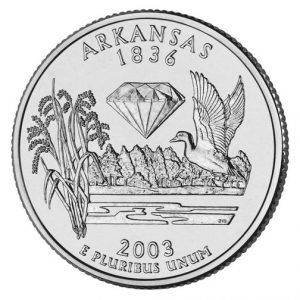
The mallard, once described as the “Chevy Impala of ducks” by Dr. Lee Foote of the University of Alberta, is the most numerous of the more than two dozen duck species found in Arkansas and is a mainstay of the waterfowl hunting sport and industry, which is estimated to bring more than 100,000 hunters to the wet timberlands and rice fields of eastern and southern Arkansas each year. In recognition of the mallard’s centrality to the sport of waterfowling and its impact on the economy and society of Arkansas, the 2025 Arkansas General Assembly designated the mallard as Arkansas’s official state duck. Act 215, originally sponsored by State Representatives Jack Ladyman (District 32) and Jeff Wardlaw (District 94), with State Senator Blake Johnson (District 21), conveyed no protected status to the bird, presumably leaving that in the hands of the U.S. Fish and Wildlife Service and the Arkansas Game and Fish Commission (AGFC). (The 2023 session of the legislature had considered a measure, HB 1849, that would have instated the mallard as the official state bird, dethroning the mockingbird, but that measure did not advance far.) The mallard duck is prominently featured on the Arkansas State Quarter, issued in 2003.
Mallards are medium-to-large dabbling ducks; that is, they feed mainly on insect larvae, seeds, and water plants, which they reach by tipping their head forward in shallow waters. The mallard’s bill is flat and broad, and mallards float high in the water when sitting or swimming. Once in the air, mallards are fast: Migrating flocks have been clocked as flying at 47.5 knots (55 miles per hour ground speed).
Male mallards exhibit a dark, iridescent-green head and bright yellow bill. The gray body is sandwiched between a brown breast and black rear. Females and juveniles are mottled brown with orange-and-brown bills. Both sexes have a white-bordered, blue patch in the wing. Interestingly, only the female produces the “quack, quack” usually associated with all ducks; the call of the mallard male is a quieter, rasping sound.
The mallard is an ancestor or close relative of almost all of North America’s ducks. Mallards are particularly known for hybridizing with other species, including the American black duck, mottled duck, northern pintail, cinnamon teal, green-winged teal, and canvasback.
Mallard pairs form long before the spring breeding season. Pairing takes place in the fall, and courtship behavior continues through winter. The female incubates the eggs and rears the young; paired males typically leave the female mid-incubation but remain nearby, seeking additional breeding opportunities with other females that may have lost a nest or brood to predators. Male mallards are in fact known for their tendency for predatory “extra-pair” copulation.
Mallards are robust and can be long-lived: In the wild, longevity estimates sampled from various state and provincial wildlife agencies’ publications range between five and ten years. The oldest known North American mallard was a male that was banded in Louisiana in 1981. He was at least twenty-seven years and seven months old when he was shot in Arkansas in 2008.
Duck hunting has long been a cherished tradition in Arkansas, shaped by the state’s abundant wetlands. Native Americans and early Euro-American settlers relied on waterfowl as a vital food source. Even before the advent of rice culture in the Grand Prairie, Arkansas’s eastern wetlands attracted huge flocks of birds including many species of ducks.
These wetlands supported mainly subsistence hunters until the post–Civil War decades, when a railroad boom provided access for sport hunters, who could reach the sunken lands by rail to harvest waterfowl and other game, unrestrained by state or federal law. The sport hunters were joined by market hunters, who sent ice-packed ducks, deer, and fish north to markets in Missouri and beyond. Many of these market hunters were or had been subsistence hunters, who viewed the “sports” with disdain. The sport hunters returned the sentiment; they leased or purchased large tracts of land to preserve their hunting, leading to mutual recriminations and retaliation in the long-running dispute known as the Big Lake Wars.
Meanwhile, effectively unrestricted hunting continued, with a predictable result: Wildlife populations, including ducks, plummeted. The Arkansas legislature tried to address local hunters’ concerns, but its actions had little effect.
In the early twentieth century, however, concerns over dwindling wildlife populations emerged on a national level as well as in Arkansas. The Weeks-McLean Act of 1913 and the Migratory Bird Treaty of 1918 placed ducks and geese under federal protection. New federal and state laws were passed to establish hunting seasons and to set daily limits on harvesting wildfowl.
In the twentieth century, mallard populations generally rose in proportion to the available habitat and feeding zones offered by the spread of rice cultivation in the Grand Prairie. Farmers tried to discourage the influx of ducks by using lights and noisemakers, but hunting proved to be a more effective deterrent. By the middle of the century, Arkansas’s reputation as a destination for sport waterfowling was established, with hunters coming to hunt both in the green timber country and in the rice field prairies. Nash Buckingham, a Tennessee-based sportsman, author, and conservationist, frequently hunted the eastern Arkansas wetlands; he favored a hunting preserve at Wapanocca Lake near Turrell (Crittenden County):
In the decades since Buckingham last hunted Arkansas’s duck country, mallard populations have remained ample, though fluctuating from year to year due to number of factors, no longer including overhunting. The state’s mallard “population” is hard to delineate exactly, since mallards are migratory waterfowl and call no state home for long, but in late January 2024, AGFC field researchers estimated 250,401 mallards (out of 752,293 total ducks) in Arkansas’s Delta region, 38,321 mallards (out of 76,764 total ducks) in the Arkansas River Valley, and 5,455 mallards (out of 22,830 total ducks) in southwestern Arkansas. AGFC biologists noted that these figures represented total duck population estimates nearly 480,000 birds below the long-term average, largely due to the relatively low number of mallards, particularly in the Delta. A survey taken one year later showed a significant increase in both total ducks and mallards: Biologists estimated 452,017 mallards and 924,545 total ducks in the Delta. Duck counts in the Arkansas River Valley totaled 84,119 ducks, including 39,058 mallards. The duck population slightly declined in southwestern Arkansas, with staff estimating 22,160 ducks; only 2,660 of these were mallards.
Human hunters pose a risk to mallards, and mallards to some degree are risky for humans: They and other wild ducks have been identified as carriers and disseminators of the avian influenza virus, which is transmissible to other birds, animals, and humans. Mallards may also be carriers of other diseases, and they tend to be asymptomatic.
For additional information:
Birch, Brent. The Grand Prairie: A History of Duck Hunting’s Hallowed Ground. Stuttgart AR: Grand Prairie Media LLC, 2018.
Buckingham, Nas. De Shootinest Gent’man and other tales. New York: Derrydale Press, 1934.
Cummings, John. Geese, Ducks and Coots. USDA Wildlife Damage Management Technical Series. Fort Collins, CO: USDA Animal and Plant Health Inspection Service, Wildlife Services, 2016.
Foster, Buckley T. So Great Was the Slaughter: Market Hunters, Sportsmen, and Wildlife Conservation in Arkansas. Tuscaloosa: University of Alabama Press, 2025.
Ma, Kevin. “The Extraordinary Sex Life of the Common Mallard.” St. Albert Gazette, April 16, 2024. https://www.stalbertgazette.com/local-news/the-extraordinary-sex-life-of-the-common-mallard-1285259 (accessed January 22, 2026).
“Mallard.” All About Birds. Cornell University Lab of Ornithology. https://www.allaboutbirds.org/guide/Mallard/overview (accessed January 22, 2026).
Neely, William, and V. E. Davison. Wild Ducks on Farmland in the South. Farmers’ Bulletin 2218. Washington DC: U.S. Department of Agriculture, 1971.
Avis Merganser
Little Rock, Arkansas


Comments
No comments on this entry yet.