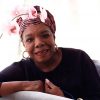


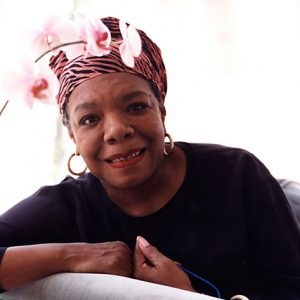
 Maya Angelou
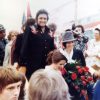
 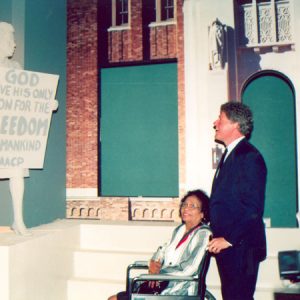 Daisy Bates with Bill Clinton
 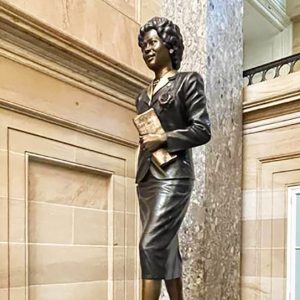 Daisy Bates Statue
 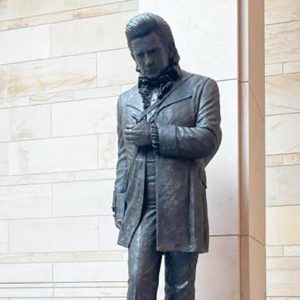 Johnny Cash Statue
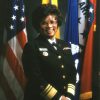
 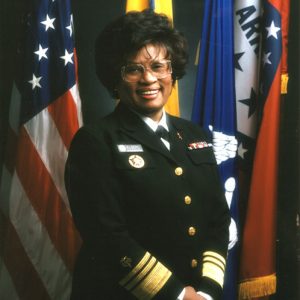 Joycelyn Elders
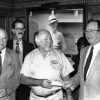
 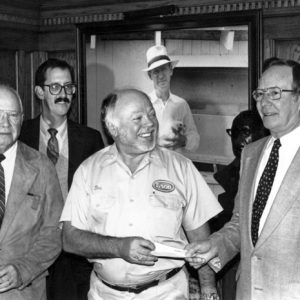 Don Tyson
501-918-3025
calsfoundation@cals.org
calsfoundation@cals.org
Students will apply research techniques in order to develop a biography of a famous Arkansan, assembling research into a creative visual format for presentation.
Pen or pencil; lined paper; Internet access or relevant printouts
Arkansas has produced a plethora of notable people, from musicians to poets, athletes to politicians, and there has been no shortage of worthwhile individuals from the state. In this activity, students will research one such individual with the help of the CALS Encyclopedia of Arkansas in order to not only appreciate those worthwhile locals but also learn how to navigate an online encyclopedia.
Challenge students to describe exactly what it takes for a person to become famous. Leave it open and encourage silence while students write their thoughts on paper. After three minutes, ask students what they came up with. Possible answers may be money, political power, talent in the arts or other areas, or family connections. List student answers on the board, screen, or projector.
Ask if students know anybody like this who comes from Arkansas. Give students ample time to answer before revealing that they will be researching a famous Arkansan. A slideshow presentation with examples of famous Arkansans and their work (e.g., Maya Angelou, Bill Clinton, Daisy Bates, etc.) is suggested to pair with this bellringer to scaffold students’ expectations for their own research project.
The teacher may assign individuals for students to research, choose them randomly, or have students choose for themselves. Below is a list of famous Arkansans with an entry on the EOA website for students to use as a source in their research. Keep in mind that this list is not exhaustive and merely represents examples of famous Arkansans for students to research.
The teacher may want to construct their own rubric for students’ research project. Below are some possible details students should uncover during their research:
Students will create a visual biography based on their research, including a bibliography. Students will design a slideshow presentation, video, or poster and will present for at least ten minutes on their findings. These presentations demonstrate their ability to apply research methods, present to an audience, write for an audience, discover and compile relevant information from secondary sources, and demonstrate creativity in their presentation.
As this lesson offers an open, student-led activity, possible extensions are endless. Consider any of the following ideas:


"*" indicates required fields