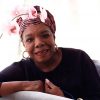


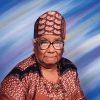

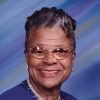
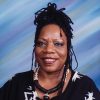

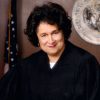
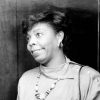
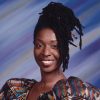

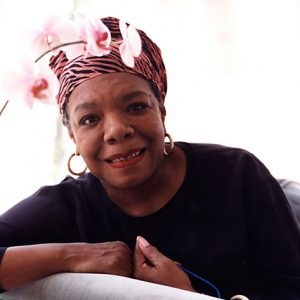
 Maya Angelou
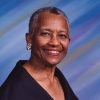
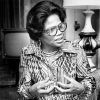
 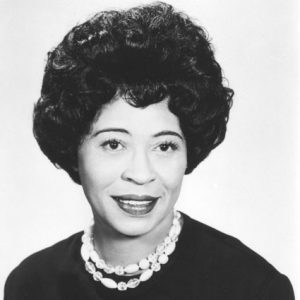 Daisy Bates
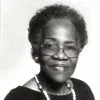
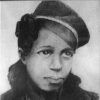
 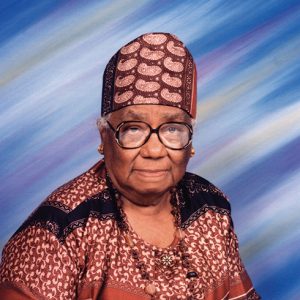 Evangeline K. Brown
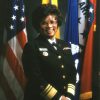
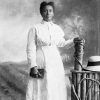
 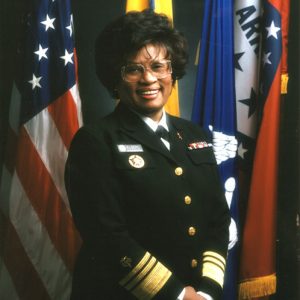 Joycelyn Elders
 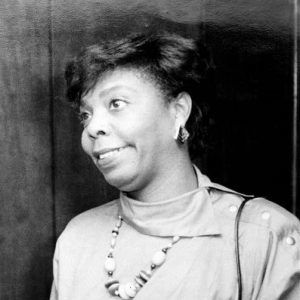 Lottie Shackelford
 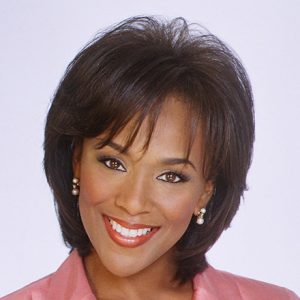 Debbye Turner Bell
501-918-3025
calsfoundation@cals.org
calsfoundation@cals.org
As an exercise in conducting research, students will find information about a female member of the Arkansas Black Hall of Fame in order to craft a presentation demonstrating the substantial impact of that individual on Arkansas.

Founded in 1992 by Charles O. Stewart and Patricia Y. Goodwin, the Arkansas Black Hall of Fame serves as a means of recognizing accomplished Black Americans with Arkansas roots.
The first ceremony was held on October 30, 1993, and each year six inductees are chosen from diverse fields are recognized for their contribution to Black culture and the nation.
Nominations and recommendations come in from across the country and are carefully considered each year. Among those inducted into the Hall of Fame include writers, singers, actors, visual artists, musicians, athletes, politicians, religious leaders, doctors, lawyers, educators, scientists, and civic and social leaders. Selections are revealed to the public during the first week of September, and the ceremony is generally held on the third Saturday of October.
The money made from ticket sales goes to funding the Arkansas Black Hall of Fame Foundation, a nonprofit organization that provides grants to other organizations to work toward improving education, youth development, health and wellness, and economic development for black and other under-served communities throughout Arkansas.
If students have internet access, direct them to open the Encyclopedia of Arkansas’s Black Women’s History in Arkansas quiz.
Challenge students to try and get as many questions as possible correct, without cheating, and offer some incentive to the winners. If taking the quiz virtually, the questions are taken from a random pool in a random order, so they will be different each time. Perhaps have students take the quiz multiple times to see the highest score they can get.
By exposing students to some of these names and their accomplishments, students will likely find interesting information they did not previously know. Get them hooked with this lighthearted exposure to history. Soon, students will pick a historical figure to research, and likely will find them directly correlated to this quiz. We will go back at the end and have the students quiz again to see what they learned!
Black Americans have been keystone members of the greater Arkansas community since before its inception. Anything from fighting in wars, cultivating the land, opening businesses, leading government offices, and promoting civil rights, Black Arkansans have left an impact on the state that cannot possibly be overstated.
In 1992 an organization was founded to celebrate these influential Black Arkansans, the Arkansas Black Hall of Fame. This organization inducts six people each year into its accolades, accepting nominations and recommendations from across the country on who should be inducted.
In this lesson, students will dive into the first women inducted into the Hall of Fame; from education to theater, literature to politics, these women left a lasting impact on Arkansas.
Students should look through the following list of women inducted into the Arkansas Black Hall of Fame during the first ten years of its existence, from 1993 to 2002; these inductees represent not only notable Black female Arkansans, but also a snapshot into what the Arkansas Black Hall of Fame was trying to represent at its founding.
Have students pick one of these twenty women to study and write about. Consider having students craft slideshow biography presentations on their chosen figure. Alternatively, an essay, character portrait, or short-form writing could be used.
Whatever assignment structure you choose to use with your students, ensure the students will be interacting and sharing their information in some way. By the end of this, students should have some working familiarity with each woman on this list, not just the one they are studying. Presentations in which students listen and take notes from their peers, and both presentation and notes are graded, provide one of the most seamless ways to ensure this.
Note: Use the link to go to the individual entries to find more information about each woman, as well as photos.
Maya Angelou was an internationally renowned bestselling author, poet, actor, and performer, as well as a pioneering activist for the rights of African Americans and of women. Her first published book, I Know Why the Caged Bird Sings (1970), was an autobiographical account of her childhood, including the ten years she lived in Stamps (Lafayette County) with her grandmother. The popular and critical success of the book was the foundation of her career as an author and public figure, as well as the basis of her identification as an Arkansas author. She was in the first group of inductees into the Arkansas Black Hall of Fame in 1993. She held over fifty honorary university degrees, along with many other awards recognizing her accomplishments in the arts and her service to human rights.
Daisy Lee Gatson Bates was a mentor to the Little Rock Nine, the African American students who integrated Central High School in Little Rock in 1957. She and the Little Rock Nine gained national and international recognition for their courage and persistence during the desegregation of Central High when Governor Orval Faubus ordered members of the Arkansas National Guard to prevent the entry of Black students. She and her husband, Lucious Christopher (L. C.) Bates, published the Arkansas State Press, a newspaper dealing primarily with civil rights and other issues in the Black community.
Lottie Lee Holt Shackelford is a prominent African American political leader who became the first female mayor of Little Rock (Pulaski County) and commanded leadership roles in the national Democratic Party for three decades. She was an Arkansas delegate to every Democratic National Convention from 1980 through 2012, often as a so-called superdelegate, and was chosen to be an automatic superdelegate for the 2016 convention. In addition, she was the longest-serving national vice chair in the Democratic Party’s history.
Evangeline Katherine Johnson Brown was a longtime educator and activist in the Arkansas Delta who served as a plaintiff and witness in Jeffers v. Clinton, a lawsuit that helped create new majority black districts for the Arkansas House of Representatives and the Arkansas Senate. She was inducted into the Arkansas Black Hall of Fame in 1994.
Debrah Lynn (Debbye) Turner Bell, who grew up in Jonesboro (Craighead County), was crowned Miss America 1990. After her reign as Miss America, she became a veterinarian, appeared on national television, and served as a motivational speaker on youth-related and Christian topics. She was inducted into the Arkansas Black Hall of Fame in 1994.
Joycelyn Elders was director of the Arkansas Department of Health and the U.S. surgeon general in the administration of President Bill Clinton. Reactions to her controversial opinions led to her resignation after just over a year as surgeon general. She was inducted into the Arkansas Black Hall of Fame in 1995 and the Arkansas Women’s Hall of Fame in 2016.
Ethel Virginia Curry Kearney (1917–1982) and here husband Thomas James (T. J.) Kearney (1906–2013) were cotton sharecroppers. (They were inducted into the Arkansas Black Hall of Fame together.) They were recognized for their contributions to childhood education and Christian service by the state of Arkansas; Johnson Publishing Company of Chicago, Illinois; President William J. Clinton; and the country of Israel. Of the couple’s nineteen children, eighteen were college graduates. A number of their children served the state of Arkansas and the U.S. government in leadership roles.
Andree Yvonne Layton Roaf was an Arkansas attorney and jurist. A 1996 inductee to the Arkansas Black Hall of Fame, Roaf distinguished herself in the fields of biology, law, and community service.
Barbara Ann Higgins Bond—whose professional name is Higgins Bond—is a nationally recognized illustrator and commercial artist whose most important works have concerned the history and struggles of African Americans. A pioneer freelance artist since the early 1970s, she has designed and illustrated cultural heritage stamps published by the U.S. Postal Service and the United Nations. Her art has been exhibited by the Metropolitan Museum of Art and the DuSable Museum of African American History, and she was inducted into the Arkansas Black Hall of Fame in 1997.
Gretha Denise Boston is a celebrated mezzo-soprano and Tony Award–winning actress. She made her Carnegie Hall debut in 1991 in Mozart’s Coronation Mass and won the 1995 Tony for Best Featured Actress in a Musical for her role as Queenie in the Broadway revival of Show Boat; she was the first Arkansan to be so honored. The same role earned Boston the Theatre World Award as Outstanding Debut Artist. She was also nominated for the Helen Hayes Award for Outstanding Lead Actress in a Non-Resident Production for the 2000–01 season at the Kennedy Center in Washington DC for her performance in It Ain’t Nothin’ But the Blues.
Educator, author, and lecturer Daisy Graham Anderson is best known for being one of the last surviving widows of the American Civil War (1861–1865), having been married to a former slave and U.S. Colored Regiment soldier and Union veteran. She was inducted into the Arkansas Black Hall of Fame in 1998.
Anita Marie Pointer was an original member of the singing group the Pointer Sisters. She started singing gospel in her father’s church in West Oakland, California, and went on to attain pop/R&B stardom. The group’s top-ten hits include the songs “Fire,” “Slow Hand,” “He’s So Shy,” “Jump (For My Love),” “Automatic,” “Neutron Dance,” and “I’m So Excited.”
Phyllis Yvonne Stickney is an actress, comedian, poet, playwright, producer, and motivational speaker best known for her television and film roles in the late 1980s and 1990s. Noted in the twenty-fifth anniversary issue of Essence magazine as one of 200 African American women who have changed the world, she was inducted into the Arkansas Black Hall of Fame in 1998.
Throughout her career, Gertrude Hadley Jeannette was a playwright, producer, director, and actress with roles on Broadway. Involved in the civil rights movement, she also became a rare woman taxicab driver in New York. Retired after a seven-decade theater career, she remained active in the New York theater scene. Jeannette was a member of the Arkansas Black Hall of Fame.
Eliza Ann Ross Miller was an African American businesswoman and educator, as well as the first woman to build and operate a movie theater in Arkansas. She was the wife of prosperous Helena (Phillips County) businessman, state legislator, and church leader Abraham Hugo Miller. After her husband’s death, she continued his business operations while also providing leadership in the Helena school system. She was inducted into the Arkansas Black Hall of Fame in 1999.
Lela Rochon Fuqua, whose professional name is Lela Rochon, has appeared in nearly fifty movies and television shows, starring alongside some of Hollywood’s elite actors, including Angela Bassett, Halle Berry, Gene Hackman, Whitney Houston, Timothy Hutton, Eddie Murphy, and Tupac Shakur. She was inducted into the Arkansas Black Hall of Fame in 2000.
Theressa Hoover worked for human rights and unity through the United Methodist Church for nearly fifty years. Born in Arkansas, she represented those who, in the words of her 1974 monograph, were in “triple jeopardy”: female, African American, and Christian. Hoover worked for justice and empowerment for women and children around the globe. Her influence was far-reaching, as she provided inspiration for others through her words and actions.
Arkansas native Amina Claudine Myers is a noted pianist, singer, educator, recording artist, and composer who gained prominence in Chicago, Illinois, and New York City beginning in the 1970s. She has had a long career in jazz, choral/orchestral music, and theater, and is a member of the Arkansas Black Hall of Fame and the Arkansas Jazz Hall of Fame.
Faye Clarke co-founded the Educate the Children Foundation, which was created to support rural and impoverished school districts with donations of books and other educational materials. She was inducted into the Arkansas Black Hall of Fame in 2002.
Edith Irby Jones was the first African American to attend and to graduate from the University of Arkansas Medical School, now the University of Arkansas for Medical Sciences (UAMS), in Little Rock (Pulaski County). Not only was she a pioneer in the desegregation of higher education in Arkansas and the South, but she also served as a highly successful doctor, educator, and philanthropist in Arkansas, Texas, and overseas.
Students should present the fruits of their research to the class and should be graded based off their inclusion of the following details:
Students who are not presenting should take notes over their classmates’ figures. If the students taking notes include at least four of those details above in their notes, give full credit for their notes on that presentation. If multiple students are presenting over the same historical figure, the students taking notes do not have to take notes over that figure again. If the student presenting does not themselves present at least four of the above criteria, the students taking notes should not be counted off.
If students are interested or you would like to extend this assignment, have them refer to the EOA entry on the Arkansas Black Hall of Fame or the entry on the Arkansas Women’s Hall of Fame, where students will find a list of every inducted member as well as the year they were inducted. Students can pick another person inducted into either Hall of Fame, perhaps a more recent inductee, and conduct a similar biographical assignment on that figure.
If students have internet access, have them take the quiz on Black Women’s History in Arkansas again to see if their scores have improved.


"*" indicates required fields