
501-918-3025
calsfoundation@cals.org
calsfoundation@cals.org
Radio has been an important method of communication in Arkansas for more than a century. The state received its first broadcasts in 1920, and the popular medium was quickly adopted throughout Arkansas. Radio continues to play an important role in both communication and entertainment in the twenty-first century.
First Stations
When the technology necessary to operate a station became more common, the field attracted people interested in both technology and communication. However, the federal government controlled access to the airwaves and issued licenses to both stations and operators. Inspectors could shut down stations that did not follow the appropriate guidelines. Many of the early stations in Arkansas only broadcast for a few months before falling silent.
WOK in Pine Bluff (Jefferson County) began operations in 1922 as the first station licensed in Arkansas. Founded by Harvey Couch Sr. and operated by his company, Arkansas Power and Light, the 500-watt station reached listeners as far away as Wisconsin. WOK closed in June 1923 due to the drain it placed on company resources. The equipment was moved to Arkadelphia (Clark County), where students at Henderson-Brown College used it to operate KFWD, the first college radio station in the state. It only operated for about one year on the campus, closing in June 1924.
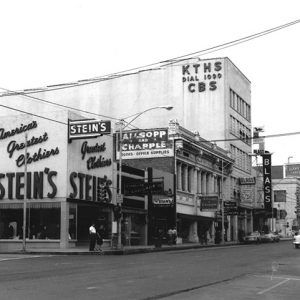
The next station in the state was located in Little Rock (Pulaski County). Beginning operations on April 8, 1922, WSV broadcast music, news, and other shows across the state. Other early stations included WCAC and WGAR in Fort Smith (Sebastian County), WCAV in Little Rock, WEAX in North Little Rock (Pulaski County), KFDV in Fayetteville (Washington County), KFKQ in Conway (Faulkner County), KFPX in Pine Bluff, KTHS in Hot Springs (Garland County), KFVC in Camden (Ouachita County), and KGCG in Newark (Independence County).
Expansion
Throughout the 1930s, more stations opened across the state. Rural electrification gave families the power needed to operate radio sets, and this technology became an integral part of daily life. News, music, and soap operas were just some of the programs broadcast nationally during this period.
Many Arkansans first learned about the attack on Pearl Harbor at 1:30 p.m. on December 7, 1941, thanks to radio announcements. The following day, almost every radio set in the state tuned in to the address made by President Franklin D. Roosevelt detailing the attack and the American response of entering World War II.
In Arkansas and across the country, the war led to a pause in the creation of new civilian stations and the manufacture of replacement parts for stations, as well as new radio sets for consumers. In July 1943, the federal government began to allow civilians to construct their own radios, utilizing limited parts. The need for experienced radio operators during wartime led to many in the field joining the armed forces, with women stepping into leadership roles on the homefront. Veda Beard took control of KBTM in Jonesboro (Craighead County) when her husband joined the Army Air Corps. The Army-Navy Hospital in Hot Springs operated a small station during the war, known as KANH, with the call letters standing for the name of the institution.
The end of the war saw an explosion in the number of stations on the air in Arkansas. While only twelve operated in 1945, twenty-six were operational by the end of 1947.
Television began competing with radio in the state on April 5, 1953, when KRTV went on the air in Little Rock. Just two months later, KFSA in Fort Smith also began broadcasting. Many radio station owners were afraid that the new medium would destroy their businesses, as the addition of television to the airwaves made it more difficult for many radio stations in the state to sell advertising. Many struggled to adapt to the changing media landscape, but within a decade, the situation had stabilized, and radio stations operated alongside television stations, with several owned by the same companies.
In the early 1960s, some AM stations began adding FM stations, which allow for clearer broadcasts. Over the next several decades, the number of FM stations in the state steadily increased, while many AM stations either transitioned to FM or went dark.
Radio Shows
A number of locally produced shows have appeared on Arkansas airwaves over the decades, along with national programming. Early shows in the state included music programming, news, and religious services. As broadcasting hours expanded and more stations came on the air, more varied programming joined the airwaves.
Some programs were set in the state yet broadcast nationally from major media markets and often played up stereotypes associated with Arkansans. Lum and Abner, airing from 1931 to 1955, proved to be the most popular and enduring. Comedian Bob Burns broadcast a show from Hollywood titled The Arkansas Traveler, which aired from 1941 to 1947.
One of the best-known radio shows, King Biscuit Time, began airing on KFFA in Helena (Phillips County) in 1941. The show highlighted blues musicians from across the Mississippi Delta region and had a major impact on the development of genre.
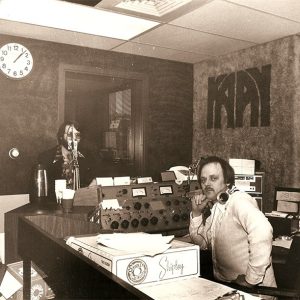
Beaker Street, a program focused on progressive rock, aired on KAAY in Little Rock from 1966 until 1972. Tales from the South, created by Paula Marie Martin, broadcast for more than a decade, allowing Southerners to relate personal stories.
Programming
The majority of stations in the state offer musical programming, with popular genres including country, pop, R&B, and Christian. Other stations offer talk radio, Spanish language music, and news. Stations utilize a mix of local programming and nationally syndicated programming.
Sports programming is a popular format in the state, with numerous stations broadcasting sports talk shows and various college and professional games. The Razorback Sports Network carries football, basketball, and baseball games played by the University of Arkansas in Fayetteville. Other universities include Ouachita Baptist University with the Ouachita Football Network, the University of Central Arkansas with the Bear Nation Network, Harding University with the Harding Sports Network, Arkansas State University, and Henderson State University.
College Stations
Radio stations sponsored by colleges and public schools have played an important role in the development of radio in the state, giving students radio experience while also filling an important gap left by commercial stations. Operating in the twenty-first century are KBPU/KTYC at the Cossatot Community College of the University of Arkansas, KHDX at Hendrix College, KUCA at the University of Central Arkansas, KXRJ at Arkansas Tech University, KXUA at the University of Arkansas in Fayetteville, KUOZ at the University of the Ozarks, KWEM at Arkansas State University Mid-South, KCAC at Southern Arkansas University Tech, and KLRC at John Brown University.
Public Radio
In addition to the college radio stations, several universities in the state support affiliates of National Public Radio (NPR). These include KASU at Arkansas State University, KUAR at the University of Arkansas at Little Rock, KUAF at the University of Arkansas in Fayetteville, and KBSA in El Dorado (Union County). The University of Arkansas at Little Rock also operates KLRE, a classical music public radio station.
Online Stations
Online radio stations in the state fall into two categories: traditional radio stations that also stream their live broadcasts on the internet and online-only stations that exclusively utilize an online stream.
Emergency Radio
Radio is used to deliver emergency information to residents, including weather warnings and evacuation instructions. The National Weather Service Forecast Office in North Little Rock uses radio announcements to reach residents across the state and warn of potential severe weather. Offices in Memphis, Tennessee; Shreveport, Louisiana; and Tulsa, Oklahoma, also cover portions of the state and likewise use radio to issue warnings.
The Emergency Alert System allows for the quick relay of information to the public in the case of a national or local emergency. Radio stations across Arkansas participate in the program, with the state broken into twelve areas to ensure that localized information can be delivered more quickly. Stations are required to perform weekly tests to ensure that the system is operating efficiently. Central Arkansas Radio Emergency Net operates a number of repeater sites in the state and hosts the Arkansas Skywarn severe storm spotter network that works with the National Weather Service.
Community Radio
Designed to serve the localities where they broadcast, community stations fill a void left by commercial and public stations. Community stations in the state include KABF in Little Rock, KUHS in Hot Springs, KWMV in Mountain View (Stone County), and KQLO in Clarksville (Johnson County). The stations air a variety of programming including music and local interest shows.
Famous Presenters
Several well-known radio personalities began their careers in Arkansas. Bobby Bones, the stage name of Bobby Estell, hosts a nationally syndicated country music program in Nashville, Tennessee. Bones began his career at KSWH on the campus of Henderson State University and later worked at stations in Hot Springs and Little Rock.
Jim Elder was known for the play-by-play broadcasts of the Arkansas Travelers baseball team he did for thirty-three years. Sportscaster Paul Eells became known across the state as the voice of the Razorbacks during his nearly three decades calling games for the University of Arkansas. Journalist Rex Nelson has served as the voice of the OBU Tiger football team for over forty years, with his calls in the Battle of the Ravine known by fans of both Ouachita and Henderson State University. Dizzy Dean, a native of Logan County and professional baseball player, became even more famous as a radio play-by-play announcer with his unique pronunciation of various baseball terms and player names.
Clinton (Van Buren County) native Opie Cates became a well-known clarinetist and band leader before hosting his own show, The Opie Cates Show, in 1947–1948. James “Uncle Mac” MacKrell became famous for his radio shows on KLRA in Little Rock and used the name recognition to run for political office while also raising money for various charities. “Sunshine” Sonny Payne hosted the King Biscuit Time program for more than sixty years in Helena-West Helena.
By 2025, a total of seventy AM stations held licenses in Arkansas, while the FCC database listed 278 FM stations in the state. Radio continues to be an important way to communicate and entertain in the state.
For additional information:
Bowman, Michael. “‘Immoral or Otherwise Offensive Matter’: Took Gathings’ 1952 Investigation of Broadcasting.” Arkansas Historical Quarterly 75 (Spring 2016): 47–61.
Deane, Ernie. “Pine Bluff Radio Station WOK, First in State.” Jefferson County Historical Quarterly 10, no. 4 (1982): 10–14.
Duncan, Hollis Wayne. “Tonight on KTHS—1925: Pioneering Hot Springs Radio Station Takes to the Air.” The Record (2025): 5.1–5.40.
Hall, Randal L., Chester Lauck, and Norris Goff. “‘Lum and Abner’: An Early Episode.” Arkansas Historical Quarterly 66 (Winter 2007): 444–451.
Ogilvie, Craig. “Radio Station KBTA Nears 70th Year of Broadcasting.” Independence County Chronicle 60 (July 2019): 34–48.
“Pine Bluff Radio Station WOK First in State.” Arkansas Gazette, December 18, 1960, p. 1E.
Poindexter, Ray. Arkansas Airwaves. North Little Rock, AR: 1974.
———. “Radio Comes to Arkansas.” Jefferson County Historical Quarterly (1983): 11–34.
David Sesser
Southeastern Louisiana University


In the photo of Bob Robbins from KAAY, I’m wondering who the guy in the background is, sitting behind the mic stand.