501-918-3025
calsfoundation@cals.org
calsfoundation@cals.org
In an effort to promote global peace after World War II, U.S. President Dwight Eisenhower advocated for American cities forming friendly relationships with counterparts abroad. At Eisenhower’s White House Conference on Citizen Diplomacy in 1956, he proposed an informal network to help foster peace and prosperity by creating bonds between people from different communities around the world. Arkansas became part of that effort in 1983, having several municipalities begin to participate in what became the Sister Cities program, including Fort Smith (Sebastian County), Hot Springs (Garland County), Little Rock (Pulaski County), North Little Rock (Pulaski County), and Subiaco (Logan County).
Eisenhower felt that if people from different cultures could understand and respect each other, conflicts might be avoided. The idea of forming cultural exchanges was not a new one; some U.S. cities already had their own relationships, such as Toledo, Ohio, which became “twin” cities with Toledo, Spain, in 1931. To build relationships around the world, the nonpartisan Sister Cities program was created in 1956 to fulfill Eisenhower’s vision. Transitioning from a government-led effort to a nonprofit 501(c)(3) organization in 1967, Sister Cities International (SCI) was born.
A sister city partnership is formally established upon the approval of the highest officials from both communities, usually the mayor and/or city council. In 2026, SCI was uniting more than 500 member communities across the United States. They are paired with over 1,800 partnerships in about 150 countries, with some American communities having several Sister Cities. In order to establish relationships with specific cities, SCI requests that there be a citizen-driven process, which often starts with local residents and organizations based on cultural and/or commercial factors. Proposals begin by finding cities of similar populations that possess such factors as shared histories or comparable geography. On the SCI website, there are listings of available American and international cities that seek other cities with which to pair. SCI’s “Cities Seeking Cities” program offers assistance in establishing partnerships based on the organization’s relationships with U.S. Foreign Service offices worldwide and international embassies in Washington DC.
In 1983, Arkansas began its Sister City initiatives when Little Rock formed a partnership with Kaohsiung Municipality, Taiwan. Little Rock went on to establish Sister City relationships with Caxias do Sul, Brazil; Changchun, China; Hanam, South Korea; and Newcastle upon Tyne, England. In 1984, Fort Smith connected with the Italian city of Cisterna and later nearby Nago-Torbole to honor Fort Smith native William O. Darby, who was killed in action near those towns in World War II. Hot Springs established a Sister City partnership with Hanamaki, Japan, in 1993 because of their common bond in having thermal springs as a tourist attraction. North Little Rock created a Sister City partnership with Uiwang, South Korea, in 1999, honoring American military service in the Korean War. With a shared name, Subiaco, Arkansas, is in a partnership with Subiaco, Australia, although there is no formal record of when the relationship began.
Hot Springs has one of the most active Sister City programs, sponsoring adult and student exchange programs between the two communities each year. There is also a permanent Hanamaki exhibit at the Hot Springs Convention Center that includes examples of Japanese folk art and a crystal sculpture that was a gift to the people of Hot Springs from the people of Hanamaki. In addition, the Hot Springs Sister City program hosts an annual Cherry Blossom Festival each spring to celebrate the culture of Japan by featuring music, dance, food, and arts. Other activities have included a Hanamaki Mokuiku Playland for children donated by Hanamaki in conjunction with the Garland County Public Library. In 2024, Hot Springs received an award from Sister Cities International for Innovation in Business, Trade, and Professional Exchange. Sister Cities International presented Hot Springs with the 2025 Best Overall Program award for cities its size.
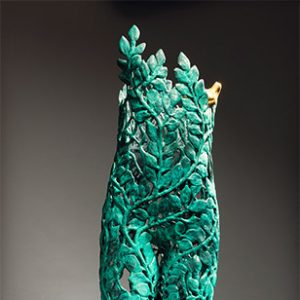
Through Little Rock’s Sister Cities program, a delegation from Arkansas went to Korea in 2018 to attend the dedication of the sculpture Youth, which was presented to Hanam, South Korea. The work was created by Michael Warrick, professor of sculpture at the University of Arkansas at Little Rock, and was placed in Hanam’s Sister City Park to commemorate the twenty-fifth anniversary of the partnership with Little Rock that began in 1992. Hanam was instrumental in funding construction for the Arkansas Korean War Memorial at Little Rock’s MacArthur Park, which lists the names of Arkansans killed in the Korean War along with six Arkansas Medal of Honor winners. Officials from Little Rock and Newcastle, England, have visited each other’s respective cities for cultural exchange programs and joint initiatives. Little Rock has also hosted civic leaders from Changchun, its Sister City in China. The visits included meetings with local officials, presentation of cultural programs, and exploration of business opportunities between Changchun and Little Rock.
In 2025, the Arkansas General Assembly passed a state law prohibiting any Arkansas municipality from having a Sister City in China. Little Rock, the only Arkansas community with an official Chinese Sister City, reestablished its association with Changchun as a “Friendship City” in order to continue the thirty-year connection, which had begun in 1994. The partnership between the two cities was previously recognized for its strong ties between citizens, winning the 2014 U.S.–China Sister Cities Award for Community Involvement. SCI designates “Friendship Cities” on its website with a special icon. The term is sometimes used interchangeably in China, with the “Sister Cities” term translated in the Chinese language as “friendly cities.” SCI notes that a Friendship City relationship may have a less formal, more limited scope compared to a Sister City, although it does not specify the details.
For additional information:
“Fort Smith’s Sister Cities.” City of Fort Smith, Arkansas. https://www.fortsmithar.gov/community/fort-smith-s-sister-cities (accessed February 26, 2026).
Hot Springs Sister City. City of Hot Springs. https://hotspringssistercity.org/ (accessed February 26, 2026).
“Hot Springs’ Sister City Program Named Best Overall For Cities Its Size by International Organization.” Hot Springs National Park, Arkansas, July 23, 2025. https://www.hotsprings.org/media-room/press-releases/hot-springs-sister-city-program-named-best-overall-for-cities-its-size-by-international-organization/ (accessed February 26, 2026).
Jones, Leon, III. “State Forces Little Rock to End 31-Year ‘Sister City’ Tie With Chinese City,” Arkansas Times, July 17, 2025. https://arktimes.com/arkansas-blog/2025/07/17/state-forces-little-rock-to-end-31-year-sister-city-tie-with-chinese-city (accessed February 26, 2026).
“Sister Cities.” Arkansas Secretary of State. https://www.sos.arkansas.gov/sister-cities/ (accessed February 26, 2026).
“Sister Cities Commission.” City of Little Rock. https://littlerock.gov/government/city-boards-and-commissions/sister-cities-commission/ (accessed February 26, 2026).
Sister Cities International. https://sistercities.org/ (accessed February 26, 2026).
Nancy Hendricks
Garland County Historical Society


Comments
No comments on this entry yet.