



501-918-3025
calsfoundation@cals.org
calsfoundation@cals.org
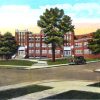
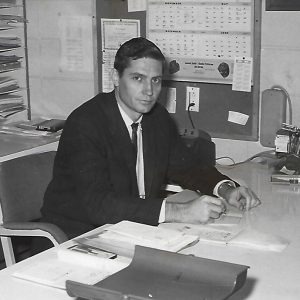
The Arkansas Technical Assistance and Consultative Center (ATACC), funded by the U.S. Department of Education, operated from 1969 to the mid-1980s. The center was created as a result of the civil rights policy Title IV Public Law 88-352, as well as the Division of Education Opportunities Program, as a way to aid the process of desegregation in public schools across the state of Arkansas. ATACC was housed on the campus of Ouachita Baptist University (OBU) and was conceived of by Dr. Allen Burton (A. B.) Wetherington, who served as the center’s first director. The center began with a staff of four: Dr. Wetherington; Dr. James Ford, who served as assistant director; Albert Baxter; and Dr. Neyland Hester.
Wetherington had an extensive background in education, with thirty-five years of experience in public education before the center’s creation. He attended Henderson State College (now Henderson State University), where he received a BA, then earned an MS from the University of Arkansas (UA) in Fayetteville (Washington County), and a Doctor of Education degree from North Texas State University (now the University of North Texas). He was also a World War II U.S. Navy veteran. He served as Superintendent of Schools at Laneburg (Nevada County) from 1933 to 1935, Blevins (Hempstead County) from 1935 to 1940, and Malvern (Hot Spring County) from 1941 to 1942.
Wetherington worked for the Arkansas Department of Education in various positions, including as the Supervisor of Rural Schools, Director of School Transportation, and Director of School Finance. He was also the Supervisor of Pulaski County Schools. Prior to creating ATACC, Wetherington worked as Director of Graduate Studies and Director of Teacher Education at Ouachita Baptist University.
James Ford also had a background in education, as a teacher and administrator. He had experience dealing with the desegregation of public schools from his time as superintendent of Des Arc (Prairie County) public schools. Ford attended Des Arc High School and graduated in 1951, going on to attend Arkansas Agricultural and Mechanical College (now University of Arkansas at Monticello). Following his graduation in 1955, he became a teacher and basketball coach at Star City High School. In 1958, he earned a master’s degree in education from UA. After earning his degree, he returned to Des Arc and became the principal, and eventually the superintendent, of Des Arc Public Schools. During his time as superintendent, he successfully desegregated the district beginning in the 1966–67 school year. After that school year ended, he began the education doctoral degree program at UA. He remained in Fayetteville until he began working for ATACC in 1969.
Albert Baxter was a native of Hamburg (Ashley County) and a professor of math and education at Arkansas Agricultural Mechanical and Normal College (now the University of Arkansas at Pine Bluff—UAPB) before going to work as a staff specialist at ATACC. Baxter was also an alumnus of Arkansas AM&N. He had been a science teacher at Eliza Miller High School in West Helena (Phillips County) in the late 1950s and early 1960s.
Neyland Hester was the Director of Development at Little Rock University (now University of Arkansas at Little Rock) prior to working at ATACC. He attended Texas Technological College in Lubbock (now Texas Tech University), Roosevelt University in Chicago, Northwestern University in Chicago, and Southern Methodist University in Dallas, Texas. He was also a Methodist minister.
Baxter and Hester worked with ATACC only during its inaugural year. Wetherington and Ford continued working at ATACC throughout most of the 1970s. Wetherington worked for ATACC as its director until 1977, when Ford took over the position.
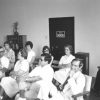
ATACC’s staff held workshops, in-service trainings, conferences, seminars, and consultations across Arkansas, as well as in some school districts in northern Louisiana. These meetings consisted of instruction from ATACC staff on topics such as planning school district compliance with the Civil Rights Act of 1964, providing tools for integrated classroom instruction, and informing school faculty and staff on how to better relate to their students in an integrated setting. Staff consultants conducted these workshops and programs at schools and universities across the state. The center also collected and shared materials such as books, pamphlets, and tapes that discussed topics including integration and race relations.
ATACC did not necessarily have a hand in implementing school desegregation measures but did work to help improve the environment in desegregated schools and schools that were in the process of desegregating. The center only aided schools that requested their assistance. ATACC’s presence and work with schools helped create space for open conversations among school staff and administrators about school integration. At a feedback conference held by ATACC in 1970, school employees stated that ATACC’s services helped increase understanding of racial issues and improve relationships between teachers and students, as well as among the teachers.
While ATACC provided consultation, resources, and advice to schools, they did not have enforcement authority. At its peak, ATACC had fourteen full-time employees. The center continued its work throughout the 1960s and 1970s, but by the mid-1970s, federal funding had decreased significantly. Eventually, due to this lack of funding, the center had to restructure and merge with the University of Oklahoma Consultative Center. By the mid-1980s, the center was defunct.
For additional information:
Allen Burton Wetherington Papers. Archives & Special Collections, Riley-Hickingbotham Library, Ouachita Baptist University, Arkadelphia, Arkansas.
Arkansas Technical Assistance and Consultative Center Records. Archives & Special Collections, Riley-Hickingbotham Library, Ouachita Baptist University, Arkadelphia, Arkansas. Finding aid online at https://obu.edu/archives/documents/Arkansas_Technical_Consultative_Center_Records.pdf (accessed February 19, 2026).
Root, Paul, Learning Together at Last: Memories of the Desegregation of the Arkansas Public School System. Arkadelphia, AR: Pete Parks Center for Regional Studies at Ouachita Baptist University, 2005.
Taylor Lawson
Ouachita Baptist University


Comments
No comments on this entry yet.