
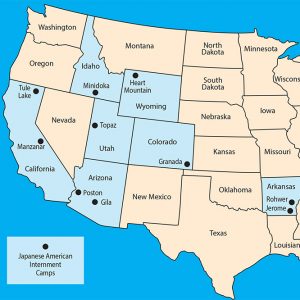
 Internment Camp Locations
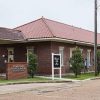
 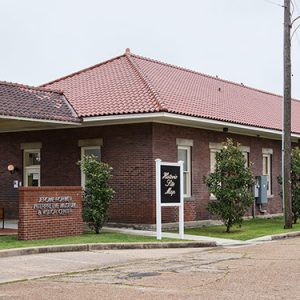 Japanese American Internment Museum
 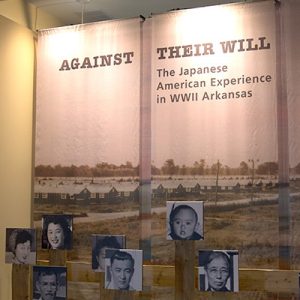 Japanese American Internment Museum Display
 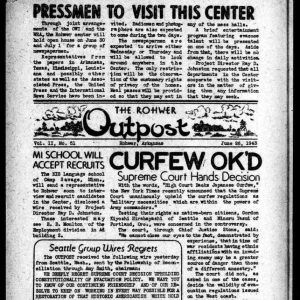 Rohwer Outpost
 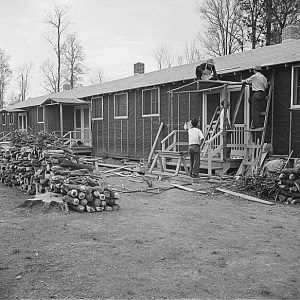 Rohwer Relocation Center
 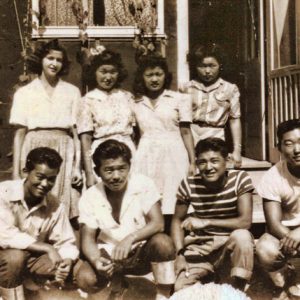 Rohwer Relocation Center
501-918-3025
calsfoundation@cals.org
calsfoundation@cals.org
Students will understand the causes and effects of Japanese internment during World War II; Students will apply knowledge of World War II and Japanese internment to create an original written historical analysis of a primary source document.
Students’ writing utensils, lined paper for students’ notes, printed copy or preferably online version of the CALS Encyclopedia of Arkansas entry Japanese American Relocation Camps for each student
More than 110,000 people of Japanese ancestry were forced by the United States Army to move from the Pacific Coast region after the Japanese attack at Pearl Harbor on December 7, 1941. Approximately 16,000 of these individuals were moved to Rohwer and Jerome, both relocation camps in Arkansas, during World War II.
They were given two weeks to settle their affairs, including selling their homes and businesses. Often, they were forced to take much less than their property was worth.
The camp at Rohwer operated from September 18, 1942, to November 30, 1945, its peak population reaching 8,475 people. The camp at Jerome operated from October 6, 1942, to June 30, 1944. Jerome operated the shortest time out of any internment camp in the country.
Those who lived in states where the internment camps were located responded in different ways. Arkansans were often unhappy with the camps and even were fearful of the Japanese Americans they held, with the governor at the time passing restricting laws on those relocated Japanese Americans.
Nearly all of those interned were American citizens. Many understood the actions of the U.S. government and tried to earn the reputation of being congenial, hardworking American citizens; however, others, especially school children and teens, were confused or distraught at their situation.
While at the camps, the interned attended school classes; worked jobs in food, cleaning, or construction; and took care of their families. Only under extremely limited circumstances were individuals permitted to leave the camps; those that were permitted were often men seeking employment to support their interned families.
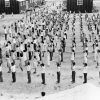
Display the photo of the Jerome Relocation Center to students. Ask that they take a moment and quietly observe this photo.

What details do they notice? What sticks out? Allow students to discuss with a partner or at a table. Things you might overhear students discussing are the dirt roads, the snow, the symmetry of the buildings, how small they appear, the train next to the camp, trees in the distance, the lack of people, or the fact that the photo is in black and white.
After students discuss, ask each group or table to describe some of their observations. When everyone has spoken, with the teacher guiding students toward these observations where necessary, ask students what they think this is a picture of. Depending on familiarity students might use words like town, camp, barrack, or park. Ask who they think lives there and why we can’t see anyone in the photograph.
This gets students thinking about the conditions Japanese Americans were subjected to throughout World War II, scaffolds their engagement with photograph primary sources to prepare them for later in the lesson, and gets them questioning the choices that were made regarding these camps before knowing the context, which will help them think critically later.
After the bellringer, students should be introduced to the idea of being forced to live in this camp. Nothing past the road we see is available to them in this scenario, only the buildings that they see. Lead this hypothetical example into direct instruction regarding Japanese internment in the United States during World War II. Ensure by the end of instruction that students are familiar with:
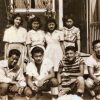
Select between two and four photographs for students to analyze from those online at the CALS Encyclopedia of Arkansas entries on the camps at Rohwer and Jerome. Make available to students via printed copies or a digital link or file.

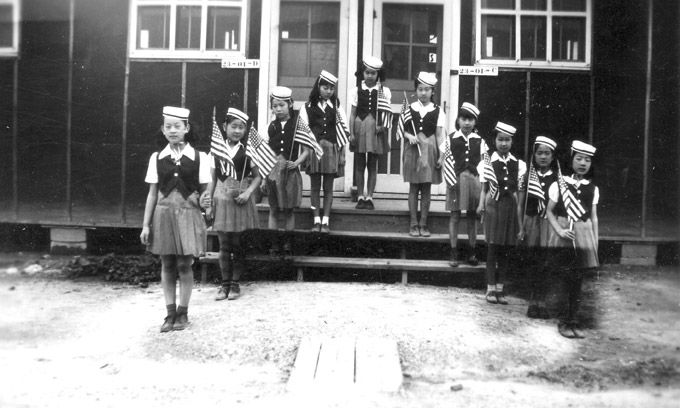
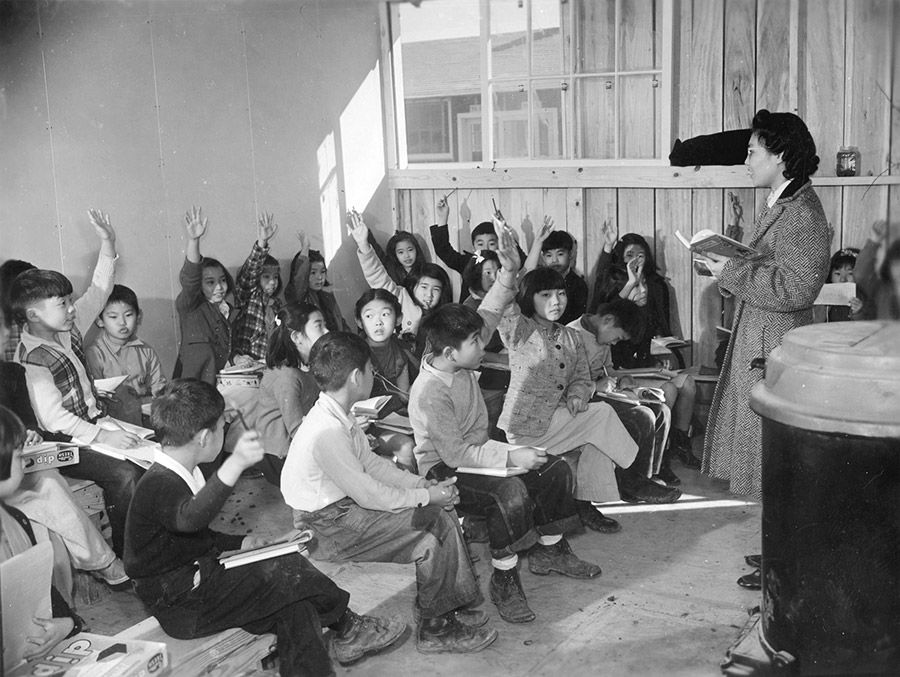

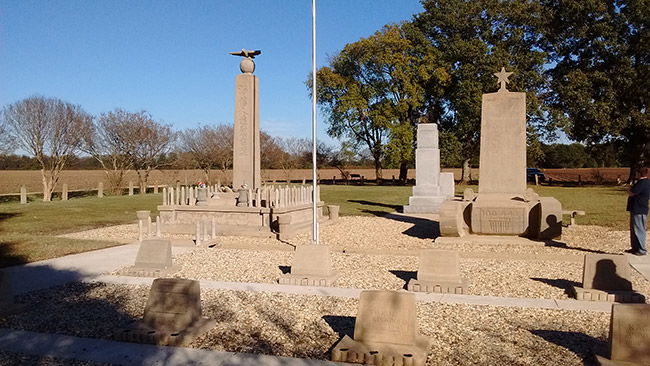
Ask students to analyze these through the eyes of historians: they are to look at each photo and describe in a detailed paragraph what is happening in that photo. They should include: the historical context of World War II, the bombing of Pearl Harbor by the Japanese, the Japanese American relocation, and the internment camps. Students should also include descriptions of the people, their clothes, and what they are visibly doing. Remind students not to guess what’s happening but describe what they see.
The purpose of this activity is to get students comfortable with personally analyzing primary documents outside of printed text. By acting through the lens of the historian, students might come to appreciate the work they do. Students will apply background knowledge given during direct instruction and critical thinking skills to create a written historical analysis of a primary source document.
Student evaluations come in the form of written and verbal responses to images being analyzed. These analyses should be at least a paragraph, include details learned in direct instruction, be thorough in their analysis of the image, and utilize appropriate tone and language to the task. This evaluation demonstrates students’ ability to engage with primary sources, understand the time period, understand language conventions and their use, utilize appropriate tone for an audience, and produce a thorough analysis of a multimedia text via images.
Direct students to search the school library or the internet for details about the experiences of Japanese Americans in camps outside of Arkansas. Densho.org is a great resource. Have students pick one camp and produce an essay, slideshow presentation, or poster describing and depicting:
This challenges students to take the skills in this lesson a step further and apply research methods to their analysis. By conducting this research themselves, students experience higher levels of rigor and self-led learning opportunities unique to a research project, while still maintaining a manageable scope for class pacing.


"*" indicates required fields