
501-918-3025
calsfoundation@cals.org
calsfoundation@cals.org
Amendment 75 to the Arkansas Constitution provides permanent funding through sales tax allocations to preserve the natural beauty and history of the state. Passed by voters in 1996, it directs an excise tax of one-eighth of one percent upon all taxable sales of property and services. The funding is credited with preserving state parks, supporting the Arkansas Game and Fish Commission (AGFC), and helping operate various museums and historic sites.
Efforts to create a stable funding stream for state parks and the AGFC date to the 1980s. Years of flat or reduced budgets severely impacted the facilities and programs across the state. By 1994, the parks were underfunded by approximately $164 million. Realizing that a steady stream of funding was needed to support both existing parks and future growth, leaders of the agencies met with legislators. A key part of the proposal held funding at current levels while allowing for the monies collected by the passage of the amendment to supplement the state appropriations. The two groups were joined by a group of concerned citizens in favor of the proposal, called the Natural State Committee.
Opposition to the tax led to a lawsuit being filed by Clarence Harris, a retired logger from Sheridan (Grant County). Harris claimed that Secretary of State Bill McCuen did not properly advertise the amendment at least six months in advance of the election. Pulaski County Chancellor Ellen Brantley ruled in favor of Harris on November 2, 1994, just six days before the election. The amendment appeared on the ballot, but the votes were not officially counted. Unofficial results showed that fifty-three percent of voters approved of the measure.
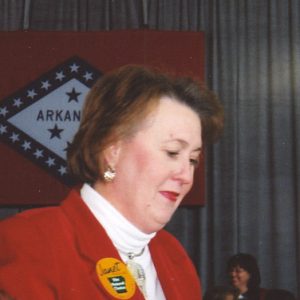
The Arkansas General Assembly placed the issue on the 1996 general election ballot. Another major campaign to support the passage of the amendment involved Governor Mike Huckabee traveling the length of the Arkansas River in the state with First Lady Janet Huckabee making the trip on a jet ski. Some controversy followed the publicity stunt, with questions raised about funds spent on supporting the effort.
The proposed amendment received approval from the voters, with 405,216 voting to support the passage while 396,932 voted against. The percentage of voters supporting the amendment was 50.5.
Arkansas operates under the 1874 Constitution, adopted following Reconstruction. While the issues appeared on the ballot as Amendment 2, as it was the second amendment listed, when approved and added to the constitution, it became known as Amendment 75.
The text of the amendment includes a detailed description of how the funds will be collected and distributed. One-eighth of one percent of all taxable sales of property and services subject to the tax levied by the Arkansas Gross Receipts Act is directed to funding the obligations of the act. This includes a wide range of products and services, with only a few specific items excluded. The text also allows for the collection of tax monies from all tangible personal property subject to the tax levied by the Arkansas Compensating Tax Act at the same rate.
The funds collected from the tax are split between several state agencies, with some minor changes in the distribution after the reorganization of the state government. The Arkansas Game and Fish Commission receives forty-five percent of the funds, which are deposited in the Game Protect Fund. An additional forty-five percent are directed to the Arkansas Department of Parks and Tourism, with nine percent going to the Department of Arkansas Heritage. The remaining one percent is directed to the Keep Arkansas Beautiful Fund Account.
A reorganization of state government in 2019 (Act 910) led to the Department of Parks and Tourism and the Department of Arkansas Heritage merging into a new agency called the Arkansas Department of Parks, Heritage and Tourism, with the two former departments becoming divisions.
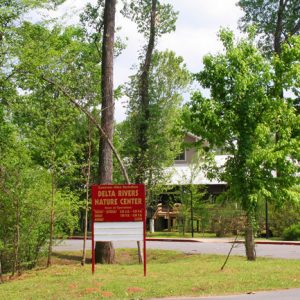
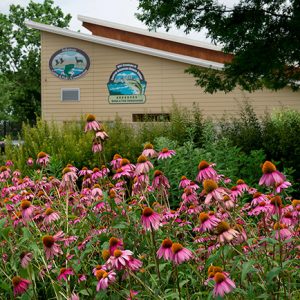
Since the passage of the amendment, the agencies have used the funds to make improvements to their holdings and increase the reach of their services. In fiscal year 2023, the AGFC received about $47 million from the monies raised by the amendment, with a little over $100 million funding all of the agencies. The funds received since 1997 have allowed the commission to construct five urban nature centers across the state and supported an archery and trap shooting program in high schools. The Division of Arkansas Heritage utilizes funds from the tax to fund grants to small museums and other cultural institutions across the state. The Division of State Parks has used the funds on countless improvements to parks, including the restoration of historic buildings
For additional information:
“Accountability.” Arkansas Game and Fish Commission. https://www.agfc.com/about-agfc/accountability/#h-1 (accessed February 6, 2026).
Caldwell, Elizabeth. “Game & Fish, Parks Stalking Eight-cent tax; Cost per Consumer put at $8.66 a Year.” Arkansas Democrat-Gazette, September 25, 1994, pp. 1B, 7B.
Hillier, Michelle. “Go to Vote on Park Tax, Backers Ask.” Arkansas Democrat-Gazette, November 4, 1994, p. 13A.
———. “Keep Word, Scrap Park Fees.” Arkansas Democrat-Gazette, November 11, 1994, pp. 1A, 11A.
———. “Lawmakers Push State Park Improvements.” Arkansas Democrat-Gazette, December 26, 1994, pp. 1B, 3B.
———. “Parks Group for Tax Ready to Fight Suit, Hires Lawyer to Meet Attack on Ballot Spot.” Arkansas Democrat-Gazette, October 21, 1994, p. 1B.
———. “State Parks Fees Fall Far Short of Projections, But Will Stay.” Arkansas Democrat-Gazette, July 22, 1994, p. 1B.
———. “State Parks to Bear Cuts, Not Closings.” Arkansas Democrat-Gazette, June 17, 1994, pp. 1B, 7B.
“Huckabee Among Inductees into Outdoor Hall of Fame.” Baxter Bulletin, July 28, 2004, p. 14.
Thompson, Doug. “Tax Dollars Promote, But Parks Need Polish.” Arkansas Democrat-Gazette, September 25, 1994, pp. 1G, 4G.
David Sesser
Southeastern Louisiana University


Comments
No comments on this entry yet.