

501-918-3025
calsfoundation@cals.org
calsfoundation@cals.org
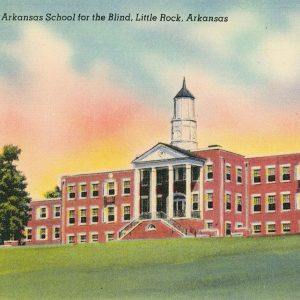
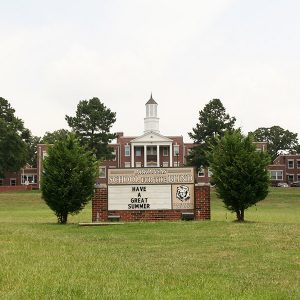
The Arkansas School for the Blind and Visually Impaired (ASB), most commonly known as the Arkansas School for the Blind, in Little Rock (Pulaski County) educated blind and visually impaired students to become productive citizens. The enriched curriculum, covering birth through age three and pre-kindergarten through the twelfth grade, also offered a home-like setting to meet all students’ needs. In 2025, it was administratively consolidated into the Arkansas School for the Deaf and Blind.
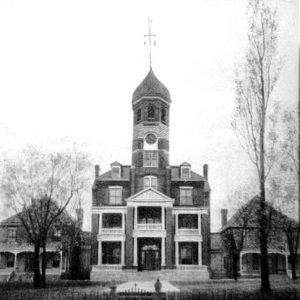
ASB was founded as the Institute for the Education of the Blind in 1859 by the Reverend Haucke, a blind Baptist minister. Otis Patten was the school’s first official superintendent. The campus was originally located in Arkadelphia (Clark County) but was moved to Little Rock in 1868, which made the school more accessible to students across the state. The first Little Rock campus was located at 1800 Center Street. The institute was renamed the Arkansas School for the Blind in 1877.
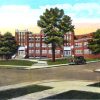
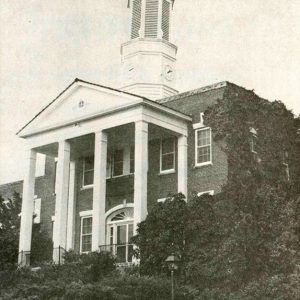
On October 9, 1939, the ASB campus was relocated to 2600 West Markham Street, where it remains today. Helen Keller spoke at the dedication, and the ASB administration building was named after her. The school had been moved because it needed room to expand as the student population increased. The school accepted students from not only across Arkansas but also across the country and the globe. In 1949, for example, Ved Mehta, who was born in what is now Lahore, Pakistan, and later became a prolific writer, traveled to Little Rock to study at the school.
In 1963, the school continued to expand by opening a facility for “multi-handicapped” students—students who had vision impairments as well as other disabilities. In 1971, ASB added a vocational curriculum to offer skills such as woodworking and computer technology. In 1976, the school began to provide additional statewide services including braille textbooks, large-print textbooks, and low-vision examinations to any blind or visually impaired students.
All teachers were certified in their core academic area, and they were also certified as teachers for the sensory impaired. If needed, teachers were given three years to become certified in that additional area. The academic program was accredited by both the Arkansas Department of Education (ADE) and the North Central Association.
ASB also had a variety of extracurricular activities such as athletics, instrumental music, art, and choir. Each class had its own adaptations for blind or visually impaired students. Other activities for students included sports such as wrestling, swimming, cheerleading, and track, as well as Special Olympics. The ASB athletic teams competed against other schools for the blind as well as public school teams.
In addition to providing full academic, counseling, social skills training, and athletic programs, ASB also had several residential dormitories available that were managed by the Home Life area. These dorms were divided by gender as well as by grade level. Students were eligible for residential placement when their homes were located outside the area served by daily transportation. Transportation for residential students was provided each week.
The dorms provided an environment where students learned additional independence and social skills that were needed to interact equally with their peers in society. Independence training activities included going to the movies or out to dinner, shopping, or other various recreational activities. Skills taught in the dorms included how to do laundry, housekeeping, and money management.
One of the later programs at ASB was an early intervention program designed specifically to help children under the age of three who were visually impaired or blind. A statewide Parent Resource Center was established in 2003 to provide informational materials, training, and assistance to parents and family members of blind and visually impaired children throughout the state.
ASB also provided an expanded core curriculum for students who need intensive interventions. Specific areas included braille, orientation and mobility, adaptive technology, daily living skills, and/or an area of academics, based on individual needs. A student could attend a few weeks or several months as needed—the intervention(s) lasted anywhere from a day to a semester or more. The ASB staff worked with the student and the public school to determine the beginning date and length of the intensive intervention.
Students who were not currently legally blind could also qualify to attend ASB if their visual impairments had a negative impact on their education and social behavior or if they were facing the possibility of future vision loss. School-age students were required to be referred by their local school districts.
The Arkansas School for the Blind programs were funded by an appropriation through the Arkansas state legislature. In 2013, the total enrollment was ninety, with approximately eighty children statewide up to age three enrolled in the ASB early intervention program.
On February 14, 2023, Governor Sarah Huckabee Sanders announced plans for a new facility at the same location to serve students at both the ASB and the Arkansas School for the Deaf, after touring both schools and finding the buildings in disrepair. In late April 2025, she signed a bill consolidating the two schools into a single entity, the Arkansas School for the Deaf and Blind.
For additional information:
Arkansas School for the Blind. http://www.arkansasschoolfortheblind.org (accessed December 2, 2025).
Miano, Lena. “New Blind, Deaf School to Open in 2026.” Arkansas Democrat-Gazette, March 13, 2025, pp. 1B, 2B. Online at https://www.arkansasonline.com/news/2025/mar/12/new-facility-replacing-schools-for-blind-deaf/ (accessed March 13, 2025).
Raney, Suzette. “The Evolution of the Arkansas Institute for the Blind.” Clark County Historical Journal (1983): 87–126.
Snyder, Josh. “Sanders Reveals Facility Plans.” Arkansas Democrat-Gazette, February 15, 2024, pp. 1B, 5B. Online at https://www.arkansasonline.com/news/2024/feb/14/sanders-announces-plans-for-new-state-of-the-art/ (accessed February 15, 2024).
Titan (Yearbook for the Arkansas School for the Blind). Butler Center for Arkansas Studies. Central Arkansas Library System, Little Rock, Arkansas. Online at https://cdm15728.contentdm.oclc.org/digital/collection/p15728coll3/search/searchterm/bc_book__arkblind*/order/date/ad/asc (accessed March 5, 2026).
Amy Craig, Brent McGehee, Joshua Nichols, Jessica Wilson
Leon Tidwell, Ann Moore, and Sharon Berry
Arkansas School for the Blind


Comments
No comments on this entry yet.